










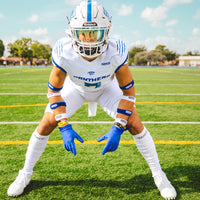



Football season builds more than athletes. It builds confident, resilient kids who show up ready, on and off the football field.
If you're deciding whether youth football is right to help your child, you're not alone. Many parents want to keep their kids safe while still giving them the chance to grow. This guide breaks down the real benefits of football, from physical development to mental toughness, and why so many families believe football is a powerful path for growth.
Because at its core, football is a game that teaches lessons kids carry for life.
1. Builds Physical Fitness And Conditioning
Football is one of the most physically demanding youth sports, but also the most beneficial, that a young athlete can play. With children and adolescents being recommended to get 60 minutes or more of moderate-to-vigorous physical activity each day,1 every practice and game challenges the entire body in ways that build lasting fitness habits.
Here's a more detailed look into the health benefits of football for kids:
Cardio And Endurance
The stop-and-go nature of football creates natural interval training that pushes kids to perform at a high level. Sprint, recover, repeat.
That’s how endurance gets built, not in theory, but in action.
For kids who play football, these reps translate directly to other sports. Whether they’re running track or competing in a weekend tournament, the conditioning carries over.
These endurance gains translate directly to other sports. Whether they pick up basketball, soccer, or track, the stamina built on the gridiron gives them a head start.
Strength And Bone Support
Every block and tackle requires full-body effort that builds functional muscle. Young players develop core stability, leg power, and upper body strength simply by competing.
The physically demanding nature of football also supports bone strength during crucial growth years.
Research shows positive effects on bone strength, especially in weight-bearing sports like football.2 The contact, the movement, the load, it all helps kids develop stronger bodies.
Yes, there might be the occasional bruise, but that’s part of learning how to compete and recover.
That’s where durability starts.

2. Improves Motor Skills And Athletic Coordination
Football trains the body to move with precision and purpose. The coordination developed on the field becomes a foundation for athletic success in any sport. It’s a fundamental part of athletic development.
Footwork And Agility
Every position demands quick lateral movement, sharp cuts, and explosive direction changes. Defensive backs mirror receivers, running backs navigate traffic, and linemen shuffle in tight spaces. These movement patterns develop agility that carries over to basketball, soccer, baseball, and beyond. These aren’t random reps. they’re game-speed drills and exercises that build real skill.
Kids learn through game situations and competitive drills rather than isolated repetitions. Quality youth football cleats provide the traction and ankle support that let kids move confidently without slipping.
Hand-Eye Coordination
Catching, throwing, tracking — these skills sharpen focus and reaction. These actions show why training eyes and hands to work together under pressure matters.
For younger players, these repetitions build neural connections that improve spatial processing across all activities. Well-fitted youth football gloves help kids secure catches consistently, building the confidence they need to keep attacking the ball.
3. Strengthens Teamwork And Social Skills
Football teaches something bigger than individual success. It teaches the value of teamwork. Here, success depends on all 11 players working together, which teaches communication and trust in powerful ways.
Working Within A Role
Each position carries specific responsibilities that directly impact every play. Understanding the easiest and hardest football positions helps kids find the right fit, and a missed assignment can undo the effort of the entire unit, so they quickly learn personal accountability.
This understanding extends beyond the field. Fulfilling a role and supporting teammates prepares young athletes for group projects, family responsibilities, and eventually the workplace.
Communication Under Pressure
Pre-snap adjustments, audibles, and on-field encouragement require players to speak up clearly and listen carefully. Football forces kids to speak up, listen, and react quickly.
The bonds formed through shared competition often become the most meaningful friendships of childhood. In fact, a youth sports study found that sport participation is consistently linked to improved interpersonal skills, prosocial behavior, and belonging, and teammates who battle together develop trust and camaraderie that last well beyond the final whistle.3

4. Builds Discipline, Mental Toughness, And Resilience
Football's structure teaches kids to embrace hard work and push through adversity. That’s where they learn how to persevere.
Practice schedules, repetitive drills, and inevitable setbacks create growth opportunities few other youth sports match.
Consistency And Work Ethic
Showing up prepared, knowing what to bring to football practice, running drills until they become automatic and natural, and preparing for opponents week after week teaches a simple truth: improvement comes from daily effort, not overnight talent.
This work ethic transfers directly to academics and future careers. Kids who actively work to get better at football understand that success requires consistent commitment.
Handling Setbacks
Football delivers regular, manageable doses of adversity that teach kids to persevere rather than shut down. Common setbacks include:
- Dropped passes
- Poor ball security
- Missed tackles
- Tough losses
Learning to reset after a mistake without being defined by it may be the most valuable skill football teaches. Players who develop mental toughness carry that mindset into every challenge life presents.
5. Develops Leadership And Character
Football provides authentic opportunities to lead, not through titles but through preparation and example.
Leadership Through Preparation
The players who earn respect arrive early, work hardest, and hold themselves accountable. Even the fastest athlete cannot lead on talent alone. Young football players learn that leading means doing the little things right every day.
Sportsmanship And Respect
Shaking hands after a loss, respecting officials, and competing with class are character lessons learned only through experience. Football teaches kids that how you compete matters as much as whether you win.
6. Sharpens Cognitive Skills And Decision-Making
Football demands both physical and mental excellence, it's like chess at full speed. Studies have shown that kids involved in team sports like football develop stronger decision-making and mental processing4 compared to those in individual sports. Every snap forces players to read, react, and execute under pressure. Think fast, move faster, that’s the game.
Learning Plays And Responsibilities
Memorizing a playbook requires real cognitive effort. Players must understand formations, recognize alignments, and process "if this, then that" scenarios before the ball is snapped.
This pattern recognition and memorization strengthens academic thinking too. Kids who learn a complex offensive scheme can handle challenging coursework.
In-Game Problem Solving
Reading a blitz, adjusting a route, or choosing when to cut back all require split-second analysis. These decisions happen constantly throughout a game. At higher levels, even approaching the NFL, this happens in seconds.
That’s why football builds decision-makers, not just athletes.
The critical thinking developed through football helps kids better understand cause and effect in school, relationships, and eventually their careers.

7. Creates Community And Long-Term Opportunities
Football connects kids to something bigger than themselves, creating relationships and opportunities that extend far into the future.
School And Community Connection
Playing for a school or local league gives kids pride in representing something beyond themselves. This experience helps them form relationships with coaches, families, and peers that often last decades.
Football also brings together kids from different backgrounds, too. The locker room becomes a place where differences fade and common goals unite.
Pathways For Continued Play
For some athletes, football opens doors from middle school through high school and potentially to college scholarships. The opportunity to continue competing can shape educational and career paths. Even kids who never play beyond youth leagues carry the discipline, teamwork, and resilience forward for life.
8. Supports A Smarter, Safer Development Path
Parent concerns about safety are valid, and the sport has responded with meaningful improvements. Modern coaching methods, age-appropriate progression, and better equipment have transformed how young athletes develop.
Better Technique And Education
USA Football's development model and heads-up tackle techniques have changed how thousands of programs teach the game. Coaches who follow proven tips for football safety through certifications and fundamentals-first training are now the standard. This is crucial for long-term development and injury prevention.
Pairing quality instruction with the right football gear gives kids confident reps backed by real protection. Properly-fitting gloves, mouthguards, pads, and cleats lets young athletes focus on development.
Flag-To-Tackle Progression
Many programs now build skills through non-contact flag football before the transition to tackle. That progression matters. Research has shown that younger tackle football athletes experience significantly more head impacts than those playing flag,5 which is why smarter development comes first. Build the skills early, then level up when they’re ready.
The benefits of flag football include building skills and confidence in a lower-contact environment before players are ready for that transition. There's no universal "right age" to start tackle football because every child develops differently. Understanding the differences in flag football vs tackle football helps parents find the right fit, prioritizing development over winning at all costs.
Elevate Their Game With Battle Sports Football Gear
Every benefit in this guide becomes more attainable when young athletes feel protected and confident in their equipment. Kids who trust their gear practice harder, play bolder, and develop faster.
Battle Sports is a leading provider of football gear, accessories, and athletic apparel designed for athletes at all levels. From gloves and mouthguards to cleats and accessories, the lineup delivers innovation, protection, and bold style that help players perform their best. The right football drip lets young athletes look and feel the part, fueling them to play the part when it matters most.
Sources:
- CDC. (2024). Physical Activity Guidelines for School-Aged Children and Adolescents. https://www.cdc.gov/physical-activity-education/guidelines/index.html
- PubMed. (2025). Effects of Physical Exercise on Whole-Body Bone Mineral Density in Adolescents: A Systematic Review and Meta-analysis. https://pubmed.ncbi.nlm.nih.gov/41123070/
- Springer. (2026). The impact of sports participation on psychological health and social outcomes in children and adolescents: a systematic review and update to the "Mental Health through Sport" conceptual model. https://link.springer.com/article/10.1186/s13643-026-03104-1
- PMC. (2024). Daily Physical Activity, Sports Participation, and Executive Function in Children. https://pmc.ncbi.nlm.nih.gov/articles/PMC11653117/
- CDC. (2025). Comparing Head Impacts in Youth Tackle and Flag Football. https://www.cdc.gov/traumatic-brain-injury/data-research/comparing-head-impacts/index.html